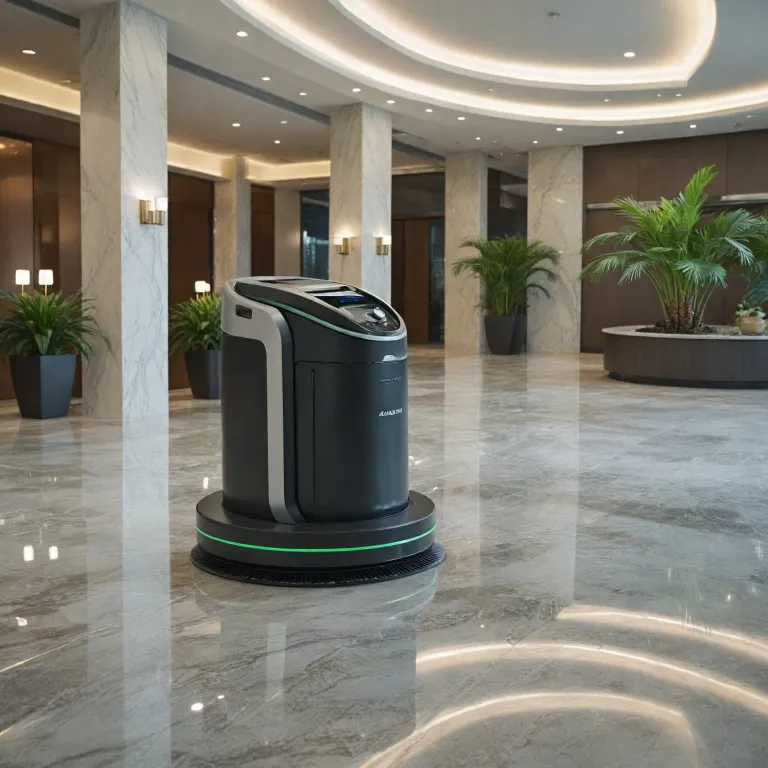
Why orbital scrubber technology matters for travel and hospitality networks
For agences loisirs & business, tour-opérateurs, travel managers, OTA, and hotel suppliers, floor cleaning is rarely seen as a strategic topic. Yet the way a floor scrubber operates directly affects guest perception, operational safety, and long term asset value. An orbital scrubber adds a new layer of control, because its orbital scrubbing motion delivers consistent floor cleaning results with less water and fewer chemicals.
In multi property portfolios, the right cleaning machine can standardize service levels across brands and destinations. An orbital auto scrubber, with its rectangular head and stable pad pressure, helps teams maintain hard floor areas in airports, rail hubs, resorts, and urban hotels with the same quality benchmark. This is particularly valuable for commercial floor zones such as lobbies, conference centers, and high traffic walk floor corridors where image and hygiene are non negotiable.
Hospitality buyers also need to understand how orbital scrubbing technology influences total cost of ownership. Compared with traditional auto scrubbers, an orbital scrubber can reduce water and chemical consumption by up to 70 %, which directly lowers the operating price per square metre cleaned. For travel managers and OTA facility partners, this supports ESG commitments while keeping the original price of the product aligned with long term ROI expectations.
Manufacturers such as Tennant Company and Minuteman International now position orbital floor scrubbers as multi role assets. Their machines are designed for daily cleaning, periodic restoration of floor finish, and even chemical free stripping on sensitive hard floor surfaces. For agencies and tour operators negotiating framework agreements, this versatility means fewer machine types, simpler training, and more predictable service outcomes across global networks.
From back of house to brand asset: aligning orbital scrubber choices with guest experience
In hospitality, a cleaning machine is often hidden in back of house corridors, but its impact is visible in every public space. The choice of orbital scrubber, from small walk behind units to larger commercial floor machines, should therefore be aligned with the brand promise and target clientele. A luxury resort, for example, will prioritise ultra quiet operation around 63 dBA to protect guest comfort during early morning floor cleaning.
Because orbital scrubbing uses high speed orbital motion, typically around 2 250 RPM, it can remove embedded dirt without aggressive chemicals that might affect indoor air quality. This is crucial for tour-opérateurs and travel managers who contract hotels for family or wellness oriented programmes, where sensitive guests expect low odour environments. An orbital auto scrubber with the right pad selection can maintain floor finish on spa corridors, hard floor pool decks, and wellness lounges with minimal disruption.
Front office teams also benefit from the easy manoeuvrability of compact auto scrubbers in tight reception areas. A small orbital scrubber with reduced weight lbs and ergonomic controls allows staff to clean around check in queues and luggage without safety risks. When agencies audit partner hotels, they increasingly evaluate how floor machine choices support both guest flow and staff wellbeing, not just the visible shine of the commercial floor.
Suppliers that provide clear information on solution capacity, recovery tank design, and battery autonomy help travel buyers compare options transparently. By linking these technical features to concrete service KPIs, such as time to clean per square metre or number of rooms serviced per month, orbital scrubber vendors move from commodity item providers to strategic partners. This shift elevates floor cleaning from a cost centre to a lever for brand differentiation in competitive destination markets.
Technical essentials: how orbital scrubbing optimises hard floor maintenance
Understanding the mechanics of orbital scrubbing is essential for agencies and OTAs negotiating multi country cleaning contracts. An orbital scrubber combines a primary rotary motion with a rapid orbital movement, generating micro vibrations that dislodge soil from hard floor surfaces. This dual action allows the pad to clean more evenly, reducing swirl marks and protecting delicate floor finish layers in conference centres and hotel ballrooms.
Different pad types transform one orbital floor scrubber into a multi purpose floor machine for diverse environments. White polishing pads refine high gloss lobby floors, red cleaning pads handle routine floor cleaning in breakfast areas, blue scrubbing pads tackle heavier soil in back of house corridors, and maroon surface prep pads support chemical free removal of old floor finish. For travel managers overseeing mixed portfolios, this pad flexibility simplifies procurement, because one product platform can address several service options.
Solution capacity and recovery tank volume are critical when planning cleaning routes in large resorts or convention hotels. A higher solution capacity reduces refill stops, while an efficient recovery tank design ensures dirty water is captured fully, improving hygiene and slip resistance. When combined with a robust battery system, an orbital auto scrubber can operate for extended periods, enabling night teams to cover extensive commercial floor areas without interruption.
For agencies comparing auto scrubbers, technical specifications such as weight lbs, pad pressure, and scrubbing path width must be linked to real world productivity. A heavy duty orbital scrubber may offer superior performance on hard floor surfaces in airports or cruise terminals, but a smaller, more easy to handle cleaning machine might be better for boutique hotels. By mapping these parameters to actual guest flows and space typologies, travel professionals can align machine selection with operational realities.
Procurement strategy: balancing price, service, and sustainability across portfolios
For agences loisirs & business and tour-opérateurs managing large contracting volumes, the price of an orbital scrubber is only one part of the equation. The original price must be evaluated alongside expected lifespan, service support, and the impact on labour productivity across multiple properties. When auto scrubbers reduce manual mopping, staff can be redeployed to higher value guest facing tasks, improving both satisfaction and revenue potential.
Distributors such as Imperial Dade highlight that orbital floor scrubbers can significantly cut water and chemical consumption, which directly lowers operating costs. Over a typical month, these savings accumulate across dozens of hotels, making the total cost of ownership more attractive than cheaper but less efficient machines. For OTAs and travel managers engaged in sustainability reporting, the reduced environmental footprint of orbital scrubbing strengthens ESG narratives in corporate travel programmes.
Service agreements are another decisive factor when selecting a cleaning machine fleet. Reliable maintenance, rapid access to spare parts, and clear training materials ensure that orbital scrubber downtime remains low, protecting cleaning schedules during peak season. Agencies can negotiate framework contracts that include periodic audits, pad replacement plans, and battery health checks, turning a simple item purchase into a long term partnership.
When evaluating offers, procurement teams should request transparent breakdowns of product configurations, from small walk behind auto scrubbers to heavy duty ride on units for large convention centres. A structured comparison that includes solution capacity, recovery tank size, weight lbs, and expected battery runtime allows for objective benchmarking. For deeper insight into how such strategic sourcing supports career development in destination management, many professionals consult resources on opportunities in destination management company roles, where operational excellence is a recurring theme.
Operational deployment: tailoring orbital scrubber fleets to diverse hospitality assets
Once procurement decisions are made, the real challenge lies in deploying orbital scrubber fleets across varied hospitality environments. A city centre hotel with limited storage may prioritise a small, easy to transport auto scrubber, while a resort with extensive hard floor promenades needs a heavy duty commercial floor machine. Travel managers must therefore segment their property portfolios by size, layout, and guest profile before assigning specific cleaning machine models.
Training is central to extracting full value from orbital scrubbing technology in daily floor cleaning routines. Staff need to understand how to select the correct pad, adjust solution capacity, and monitor the recovery tank to avoid overflows that could disrupt guest movement. Clear visual guides, sometimes supported by click view digital tutorials, help multilingual teams operate each orbital scrubber safely and consistently.
Battery management is another operational pillar, especially for walk floor cleaning during night shifts in airports or large transit hubs. Proper charging cycles extend battery life, maintain stable performance, and reduce unexpected downtime that might compromise commercial floor presentation before early morning departures. Agencies can integrate simple checklists into housekeeping SOPs, covering pad inspection, recovery tank emptying, and quick visual checks of weight lbs related components such as wheels and squeegees.
For OTAs and tour-opérateurs who audit partner hotels, visible use of modern orbital auto scrubbers signals a commitment to hygiene and sustainability. Properties that can demonstrate reduced chemical usage, efficient water management, and consistent hard floor appearance are more likely to meet international programme standards. Over time, this alignment between orbital scrubbing practices and brand expectations strengthens trust across the entire travel and hospitality value chain.
Future trends: data driven cleaning and evolving expectations in travel environments
The evolution of orbital scrubbing technology is closely linked to broader shifts in travel and hospitality expectations. Guests now associate visible cleanliness of hard floor areas with overall safety and service quality, especially in high density spaces like buffets and conference foyers. As a result, agencies and travel managers increasingly view the orbital scrubber not just as equipment, but as part of a measurable service ecosystem.
Manufacturers are integrating smarter controls and telematics into auto scrubbers, enabling remote monitoring of usage hours, battery status, and maintenance needs. This data helps large hotel groups and OTAs optimise cleaning schedules, adjust staffing, and plan pad and product replenishment more accurately. Over a typical month, such insights can reveal underused machines, highlight training gaps, or justify upgrades to more efficient orbital floor scrubbers.
Industry partners emphasise that “An orbital scrubber is a floor cleaning machine that combines rotary and orbital motions to enhance cleaning efficiency and effectiveness.” This principle underpins ongoing innovation, from quieter motors to improved scrubbing technology that further reduces reliance on chemicals. For travel professionals, these advances support both guest wellbeing and regulatory compliance in markets with strict environmental standards.
Looking ahead, collaboration between manufacturers like Tennant Company, distributors such as Imperial Dade, and operators across the travel sector will shape the next generation of cleaning machine solutions. We can expect more ergonomic designs with optimised weight lbs, enhanced solution capacity to reduce refills, and smarter recovery tank systems that simplify hygiene checks. In this context, the orbital scrubber becomes a strategic ally for agences loisirs & business, tour-opérateurs, travel managers, OTA, and hotel suppliers seeking resilient, future ready operations.
Key quantitative insights on orbital scrubber performance
- Up to 70 % reduction in water and chemical usage compared with traditional floor cleaning approaches, significantly lowering operating costs across large hospitality portfolios.
- Typical orbital motion speed around 2 250 RPM, enabling efficient removal of embedded soil and supporting chemical free floor finish maintenance on hard floor surfaces.
- Operational noise levels close to 63 dBA for many commercial floor machines, supporting discreet night time cleaning in noise sensitive hotel and travel environments.
Frequently asked questions about orbital scrubber use in hospitality
What is an orbital scrubber and how is it different from a traditional auto scrubber ?
An orbital scrubber is a floor cleaning machine that combines rotary and orbital motions to enhance cleaning efficiency and effectiveness. Unlike many traditional auto scrubbers that rely mainly on a single rotary action, orbital scrubbing generates micro vibrations that improve soil removal with less chemical input. This makes it particularly suitable for hospitality environments where both appearance and sustainability are priorities.
How do orbital scrubbers help reduce water and chemical consumption in hotels ?
Orbital scrubbers use high speed orbital motion to agitate dirt mechanically, so they need less solution to achieve the same or better floor cleaning results. In practice, many operators report up to 70 % savings in water and chemical usage compared with older auto scrubbers or manual methods. For hotel groups and travel managers, these reductions translate into lower operating costs and stronger environmental performance indicators.
Which pads should hospitality teams use with an orbital floor scrubber ?
Pad selection depends on the task and the type of hard floor surface being treated. White pads are typically used for polishing, red pads for routine cleaning, blue pads for more intensive scrubbing, and maroon pads for surface preparation or chemical free removal of old floor finish. Training teams to match each pad to the correct application ensures consistent results and protects the underlying flooring investment.
Are orbital scrubbers suitable for both small boutique hotels and large resorts ?
Yes, because orbital scrubber technology is available in a range of machine sizes and configurations. Small, easy to manoeuvre walk behind units are ideal for compact lobbies or corridors, while heavy duty commercial floor machines with larger solution capacity and recovery tank volumes suit expansive resorts or convention centres. The key is to align machine size, weight lbs, and battery autonomy with the specific layout and traffic patterns of each property.
What maintenance practices extend the life of an orbital auto scrubber in hospitality settings ?
Regular maintenance includes rinsing the recovery tank, checking and replacing pads, inspecting squeegees, and following proper battery charging routines. Keeping the machine clean, monitoring wear components, and scheduling periodic professional servicing help preserve performance and reduce unexpected downtime. When these practices are embedded into housekeeping SOPs, the orbital scrubber remains a reliable asset that supports consistent guest experiences.