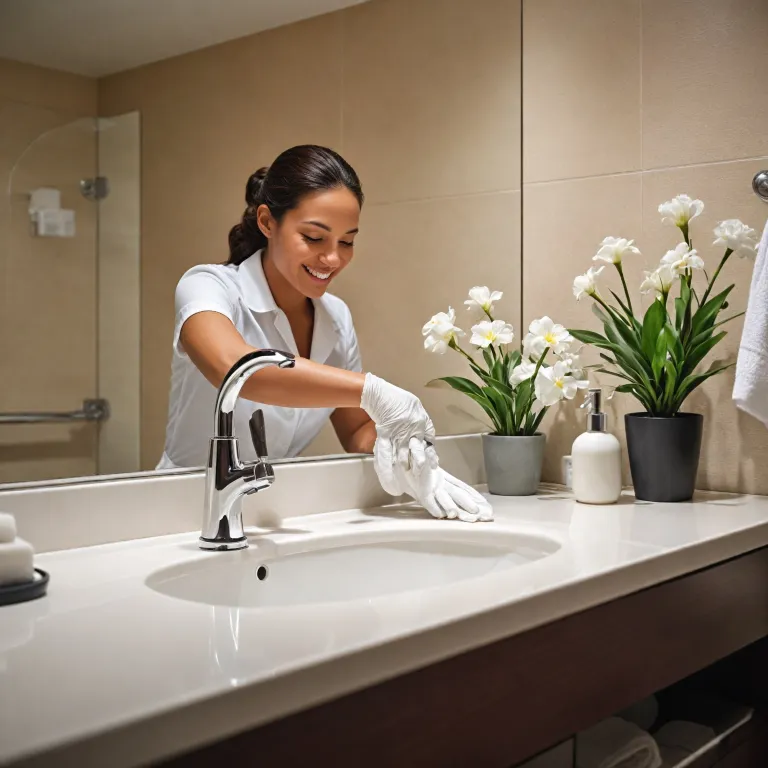
Why restroom cleaner choices now define hospitality brand perception
For agencies, tour operators and travel managers, a clean restroom is no longer a back-of-house detail. It is a frontline brand asset that shapes guest sentiment, repeat bookings and the perceived value of every contracted service. When 75 % of consumers avoid businesses after a bad restroom experience, a single neglected restroom can quietly erode long term revenue streams.
In this context, the humble cleaner becomes a strategic item in every hotel, resort or serviced apartment. A high performing restroom cleaner, supported by a clear Safety Data Sheet (SDS) and sds english version, reassures both operations teams and corporate buyers about compliance and risk management. Agencies that audit restroom cleaners and bathroom cleaner protocols during property inspections can better align guest expectations with contracted standards.
Professional cleaners in hospitality now balance efficacy, speed and sustainability in every restroom. Liquid formats, often supplied in 1 gal or multi gal packs, allow precise dosing and faster cleaning of hard surfaces during tight housekeeping rotations. A well specified spray bottle system, paired with a multi surface purpose cleaner and a dedicated bowl cleaner, helps teams maintain tile grout, basins and toilets with fewer product changes.
Green criteria are also reshaping procurement decisions for restroom cleaners. Labels such as Safer Choice, Green Seal and EPA Safer reflect a shift from harsh bleach only formulas to greener disinfectant and disinfecting technologies. For travel buyers and OTAs that promote responsible tourism, selecting restroom cleaner lines with epa safer and green seal credentials supports ESG narratives without compromising on disinfection performance.
Aligning restroom cleaner specifications with agency and OTA contracts
Agences loisirs & business and tour operators increasingly embed restroom standards into their hotel contracts. A clear definition of restroom cleaner requirements, including disinfectant spectrum, surface compatibility and sds english availability, reduces ambiguity when complaints arise. Travel managers negotiating preferred rates can request data sheet documentation for each cleaner and bathroom cleaner used in guest areas.
For OTAs, the cleanliness promise is now a core differentiator in search filters and guest reviews. When a property uses restroom cleaners with Safer Choice or Green Seal labels, this can be translated into marketing language around safer choice cleaning and greener operations. Linking these attributes to verified cleaner deodorizer performance on tile grout, hard surfaces and toilets helps agencies justify premium positioning to corporate clients.
Hotel suppliers often bundle a restroom cleaner gal format with dosing pumps, a spray bottle system and a cart spartan configuration. This integrated cart, sometimes referred to as a cart spartan kit, ensures cleaners can move quickly between restroom zones while keeping each bottle and bowl cleaner secure. By specifying multi surface purpose cleaner products that work on ceramic, stainless steel and laminate, procurement teams reduce the number of cleaners required on each cart.
Agencies can also request that properties standardise on epa safer disinfecting chemistries where feasible. While bleach remains a powerful disinfectant for some applications, many guests now prefer green and low odour cleaning in confined restroom spaces. A balanced portfolio of restroom cleaners, including a non bleach cleaner deodorizer and a targeted bathroom cleaner, allows hotels to meet both hygiene and comfort expectations.
Operational excellence: from cleaning carts to data sheets
In high turnover destinations, the difference between a clean restroom and a complaint often lies in workflow design. Housekeeping teams need a logically organised cart with each cleaner, spray bottle and restroom cleaner gal positioned for rapid access. A well planned cart spartan layout groups the bowl cleaner, multi surface purpose cleaner and cleaner deodorizer so that staff can follow a consistent disinfection sequence.
Standard operating procedures should specify which cleaners are used on which hard surfaces. For example, a non abrasive bathroom cleaner may be reserved for chrome and glass, while a stronger disinfectant targets toilets and tile grout. Clear labelling on every bottle, supported by laminated SDS and sds english summaries on the cart, reduces the risk of misuse during peak cleaning periods.
Manufacturers such as Procter & Gamble (P&G) and Reckitt Benckiser Group provide detailed data sheet documentation for their cleaners and restroom cleaners. These data sheets outline dilution ratios, contact times for effective disinfecting and any bleach related precautions. Travel managers and OTAs that audit these documents can better assess whether a property’s cleaning and disinfection regime aligns with corporate duty of care policies.
Digital access to each Safety Data Sheet also streamlines training for new cleaners. QR codes on the cart spartan frame or on each cleaner gal container can link directly to the latest sds english version. This approach supports long term compliance, as updates to disinfection guidelines or green seal and Safer Choice criteria can be communicated without reprinting every data sheet.
Guest expectations, green labels and the economics of cleanliness
Post pandemic travellers scrutinise every restroom they encounter on a journey. Agencies and tour operators report that a visibly clean restroom, with fresh odour and dry surfaces, now ranks alongside Wi Fi as a basic expectation. When half of consumers believe public restrooms are cleaner post pandemic, any regression in cleaning standards is quickly noticed and shared online.
For hotel suppliers, the shift towards green and epa safer formulations is both a challenge and an opportunity. Eco focused restroom cleaners, often carrying Safer Choice or Green Seal labels, must match the disinfectant performance of traditional bleach based products. The global toilet cleaner market is projected to grow at a CAGR of 4.5% from 2024 to 2033, reaching USD 8.8 billion by 2033, which underlines how innovation in cleaner and bathroom cleaner technologies will continue.
Liquid cleaners dominate this market, with liquid toilet cleaners accounting for 75% of sales in 2024. This preference aligns with hospitality operations, where a restroom cleaner gal format can be decanted into a spray bottle for multi surface use on hard surfaces and tile grout. Gel and tablet formats still play a role, but agencies typically prioritise flexible liquid cleaners that integrate easily into existing cart spartan setups.
Eco innovation is accelerating, with 18% of new toilet cleaner product launches featuring eco friendly and biodegradable formulations. For OTAs and travel managers promoting sustainable itineraries, specifying restroom cleaners with epa safer and green seal credentials supports broader ESG commitments. Cleaners that balance green chemistry, strong disinfection and pleasant fragrance help maintain guest satisfaction while supporting long term environmental goals.
Integrating restroom cleaner performance into distribution and channel strategy
Cleanliness standards do not exist in isolation from distribution strategy. When agencies and OTAs negotiate with hotel partners, restroom cleaner protocols can be embedded into service level agreements alongside rate parity and availability. An unclean or poorly stocked restroom damages a business's image for 84% of consumers, and 75% are less likely to return after a bad restroom experience, which makes cleaning quality a measurable commercial risk.
Channel managers and connectivity tools already track pricing and inventory across OTAs. The same mindset can be applied to operational KPIs such as restroom cleaner consumption per occupied room or frequency of disinfection cycles. Resources on how an Expedia channel manager elevates hotel performance across every booking channel illustrate how operational excellence and distribution strategy increasingly intersect.
Suppliers can support this integration by offering cleaner gal packs with dosing systems that log usage data. When each cart spartan is stocked with standardised cleaners, including a multi surface purpose cleaner, a bowl cleaner and a cleaner deodorizer, consumption patterns become easier to benchmark. Over time, agencies can correlate restroom cleanliness scores with booking conversion and review sentiment across different OTAs.
Customer service from manufacturers also plays a role in sustaining these standards. Proactive support teams can help hotels interpret each data sheet, optimise dilution for hard surfaces and adjust disinfection routines during high season. When cleaner and restroom cleaner lines are backed by responsive customer service, agencies gain confidence that their contracted properties can maintain clean, green and safe restrooms consistently.
Practical procurement checklists for agencies and hotel suppliers
To translate strategy into action, agencies and hotel suppliers benefit from structured procurement criteria. A practical checklist for restroom cleaners should start with efficacy, ensuring each cleaner and bathroom cleaner meets relevant disinfection standards for restrooms. This includes verifying that disinfectant claims are supported by laboratory data and clearly reflected in the SDS and sds english documentation.
Next, buyers should evaluate format and packaging, balancing cleaner gal containers for back of house storage with ergonomic spray bottle options for daily use. Multi surface purpose cleaner products that work on tile grout, basins and other hard surfaces reduce complexity on each cart spartan. Where bleach is required, it should be limited to targeted bowl cleaner or restroom cleaner applications, with non bleach cleaner deodorizer options used elsewhere to support guest comfort.
Sustainability criteria now sit alongside price and performance in most tenders. Buyers can prioritise restroom cleaners that carry Safer Choice, Green Seal or EPA Safer labels, ensuring that green claims are independently verified. For properties seeking long term differentiation, aligning cleaning and disinfection products with broader ESG strategies strengthens their appeal to agencies, OTAs and corporate travel managers.
Finally, procurement teams should assess training and customer service support from manufacturers. Access to up to date data sheet libraries, including sds english versions, simplifies onboarding for new cleaners and reduces compliance risk. When suppliers such as Procter & Gamble (P&G) and Reckitt Benckiser Group combine robust products with strong customer service, agencies can confidently add cart these restroom cleaner lines into their preferred supplier programmes.
Key market statistics for restroom cleaner strategies
- Global toilet cleaner market size estimated at 5.7 billion USD in recent assessments.
- Projected global toilet cleaner market size expected to reach 8.8 billion USD over the next decade.
- Liquid toilet cleaners represent approximately 75 % of current market sales.
- Gel toilet cleaners hold around 15 % market share, with tablets near 8 %.
- Eco friendly and biodegradable formulations account for about 18 % of new product launches.
- Around 50 % of consumers perceive public restrooms as cleaner than before the pandemic.
- Approximately 75 % of consumers avoid businesses after a negative restroom experience.
Frequently asked questions about restroom cleaner choices in hospitality
What is the projected growth rate of the global toilet cleaner market?
The global toilet cleaner market is projected to grow at a CAGR of 4.5% from 2024 to 2033, reaching USD 8.8 billion by 2033. This growth reflects rising hygiene expectations in hospitality, travel and public facilities worldwide.
Which product type dominates the toilet cleaner market?
Liquid toilet cleaners dominate the market, accounting for 75% of sales in 2024. For hotels and resorts, this dominance aligns with operational preferences for flexible, easy to dose restroom cleaner formats.
How are consumer preferences influencing toilet cleaner formulations?
Consumers are increasingly preferring eco-friendly and biodegradable products, leading to 18% of new product launches featuring such formulations. Hospitality buyers therefore look for restroom cleaners that combine strong disinfection with credible green certifications.
What impact does restroom cleanliness have on businesses?
An unclean or poorly stocked restroom damages a business's image for 84% of consumers, and 75% are less likely to return after a bad restroom experience. For agencies, OTAs and travel managers, this makes restroom cleaner performance a direct driver of loyalty and revenue.