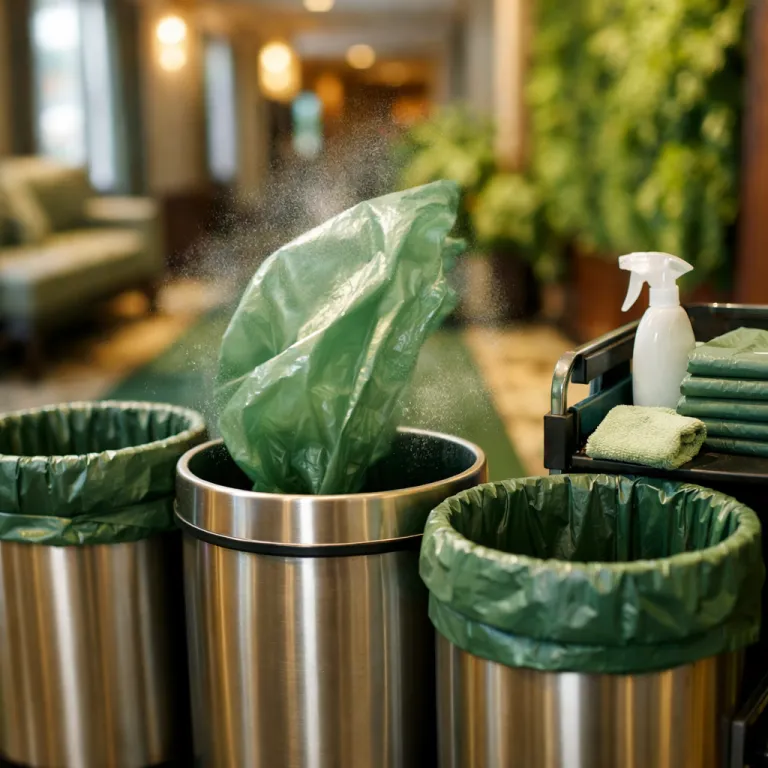
Rethinking open top trash cans for high traffic hospitality environments
In hospitality operations, the humble trash bin often reveals more about service culture than a lobby chandelier. For agencies, tour operators, travel managers, OTAs, and hotel suppliers, choosing a trash can open top model is now a strategic decision, not a back office afterthought. A well specified open top bin can quietly protect hygiene standards, streamline staff workflows, and elevate guest perception in every commercial space.
Open top trash cans, defined as waste receptacles without a trash lid, are particularly suited to high traffic zones where speed and touchless operation matter. In airport lounges, meeting venues, and agency offices, staff and guests can drop waste directly into the open top without handling a pedal or flap, which reduces contact points and supports stricter sanitation protocols. This open design also helps teams visually monitor waste levels, preventing overfilled garbage containers that undermine cleanliness and brand image.
Manufacturers such as Belson Outdoors and Safco Products typically use a steel body or stainless steel construction for durability in demanding commercial spaces. A stainless steel trash bin with a round open or semi round profile resists dents, supports easy clean routines, and offers a more premium look than basic plastic products. When agencies negotiate framework agreements, they increasingly specify stainless steel or steel body finishes that are smudge resistant and fingerprint proof, because these surfaces stay visually clean between housekeeping rounds.
For travel offices and call centers, a slim open or slim round open trash bin can be positioned beside each workstation without blocking circulation space. These space saving designs, often in 10 to 15 gallon liter formats, provide enough large capacity for a full shift while preserving clear evacuation routes. By standardizing on a family of coordinated open top products across office, lobby, and kitchen trash areas, hospitality brands create visual consistency and simplify procurement.
Aligning open top trash can specifications with multi channel hospitality operations
As agencies loisirs and business travel specialists expand hybrid work and multi channel servicing, the office waste strategy must adapt. A trash can open top solution that works in a compact agency office may not suit a shared coworking hub, a regional call center, or a hotel back office. Travel managers and OTAs therefore need specification sheets that map each trash bin model to its most appropriate use case, capacity, and cleaning protocol.
Average capacity for open top trash cans in hospitality tends to sit around 15 gallon, which balances large capacity with manageable weight for housekeeping teams. In meeting rooms and MICE lounges, extra large 20 gallon liter units can handle peak coffee break waste without constant bag changes, while slim open 10 gallon models suit corridors and elevator lobbies. When negotiating with suppliers like Ultimate Office, travel procurement teams should request clear data on gallon liter equivalence, steel thickness, and anti static or smudge resistant coatings.
Digital distribution also shapes physical waste needs, because more online documentation reduces paper but increases packaging from delivered products and amenities. Content on how an Expedia channel manager elevates hotel performance across every booking channel often highlights operational efficiency, yet the same thinking should apply to back of house waste flows. For example, a semi round stainless steel trash bin near parcel reception can capture cardboard straps and plastic wrap before they reach guest areas, while a round open model in the print room handles residual paper waste.
In multi brand hotel portfolios, OTAs and tour operators expect consistent hygiene standards across all contracted properties. Standardizing on stainless steel open top products with fingerprint proof finishes helps ensure that a lobby trash can in Paris looks as clean as one in Dubai, even under heavy use. Procurement teams should also compare reviews stars and total price across competing products, because a slightly higher price for a steel body with anti static and easy clean properties can reduce long term labor costs.
Designing open top trash solutions for guest facing commercial spaces
Guest facing commercial spaces such as lobbies, lounges, and conference foyers demand trash can open top solutions that combine aesthetics with rigorous hygiene. A stainless steel round open bin with a discreet top ring can frame the waste opening, hiding the bag edge and presenting a clean line to guests. In premium agencies and tour operator showrooms, this detail matters as much as furniture selection, because visible garbage quickly erodes trust in the brand.
For buffet zones and self service coffee corners, a semi round open top trash bin can sit flush against a wall or counter, maximizing space saving in narrow service corridors. These semi round products often feature a steel body with a slim profile, allowing staff to move trolleys past without collisions while still offering large capacity for cups and food waste. When specifying these products, travel managers should verify that the stainless steel is both smudge resistant and fingerprint proof, so surfaces remain presentable between cleaning cycles.
In airport lounges and rail station clubs, open top trash cans support fast, intuitive waste disposal for guests rushing to connections. Clear signage above each trash bin, combined with color coded liners, helps separate general waste from recyclables without slowing the passenger journey. Agencies managing these spaces should request reviews stars data from suppliers, focusing on feedback about easy clean performance, stability, and how well the trash lid ring holds liners during heavy use.
Lighting and placement also influence how guests interact with each trash can open top product. Positioning a slim open stainless steel bin near exits and elevators encourages last minute waste disposal, reducing garbage left on tables or counters. For high end properties, coordinating the finish of the kitchen trash containers in show kitchens with the lobby trash bins reinforces a coherent design language that guests subconsciously associate with quality and care.
Back of house efficiency and housekeeping workflows around open top bins
Behind the scenes, the choice of trash can open top models has a direct impact on housekeeping productivity and safety. Open top trash cans eliminate moving parts such as pedals or swing lids, which reduces mechanical failures and simplifies maintenance schedules. For teams working across large commercial spaces, fewer breakdowns mean fewer disruptions to cleaning routes and less unplanned expenditure on replacement products.
Housekeeping supervisors often favor stainless steel or coated steel body bins because they withstand frequent bag changes, trolley bumps, and chemical exposure. A smudge resistant and anti static finish helps repel dust and fingerprints, allowing staff to complete easy clean routines with a single wipe rather than multiple passes. When multiplied across hundreds of trash bin units in a hotel, resort, or agency network, these micro efficiencies translate into measurable labor savings and improved ROI on cleaning contracts.
Capacity planning is another critical dimension, especially in kitchens and staff cafeterias where kitchen trash volumes fluctuate with occupancy. Extra large 20 gallon or 60 liter open top bins can handle peak meal periods, while smaller 10 gallon liter units suit staff offices and break rooms. By mapping occupancy forecasts and F&B covers to the number and size of trash bin products, travel managers can avoid both overflowing garbage and underutilized containers that waste space.
Training materials should explain why open top designs support hygiene when combined with strict waste bag replacement and surface disinfection protocols. Clear guidance on how to handle the trash lid ring, how to position liners in a round open or semi round bin, and how to check for damage to the steel body helps standardize best practices. As one internal guideline often states, "Open top trash cans are waste receptacles without lids," and this simplicity is precisely what allows teams to focus on cleaning quality rather than mechanical complexity.
Integrating open top trash strategies into multi property procurement and ESG goals
For agencies, OTAs, and hotel suppliers managing multi property portfolios, the trash can open top strategy intersects with procurement, ESG commitments, and brand standards. Centralized purchasing of stainless steel open top products can unlock better price points, while ensuring consistent aesthetics and performance across all locations. Framework agreements with manufacturers such as Belson Outdoors or Safco Products should specify steel thickness, finish type, and warranty terms for every trash bin model.
Environmental objectives add another layer of complexity, because waste reduction and recycling targets influence the number and type of garbage containers required. A combination of slim open and round open bins, each clearly labeled for specific waste streams, can support higher recycling rates in offices, lobbies, and back of house areas. Procurement teams should evaluate products not only on unit price but also on lifecycle impact, including durability of the steel body, recyclability of components, and compatibility with existing waste management contracts.
Digital marketing strategies for travel and tourism increasingly highlight operational excellence as a differentiator, and waste management can feature within this narrative. Content on how digital marketing for travel and tourism elevates performance for agencies, OTAs, and hospitality suppliers often emphasizes guest experience, and a visibly clean environment supported by well chosen open top trash cans reinforces that promise. Sharing internal reviews stars metrics for each trash bin product, such as cleaning time per unit or bag change frequency, can also guide continuous improvement.
ESG reporting frameworks encourage transparency around waste volumes, recycling rates, and hygiene measures in commercial spaces. By standardizing on extra large and large capacity open top bins in high volume zones, and smaller gallon liter units in low traffic areas, organizations can collect more accurate data on waste generation patterns. This data then informs both sustainability reporting and future procurement decisions, ensuring that each new stainless steel or steel body bin contributes to measurable environmental and operational gains.
Bridging the gap between hospitality suppliers and travel intermediaries through waste design
One persistent challenge for agencies loisirs, tour operators, travel managers, OTAs, and hotel suppliers is the absence of a specific product category tailored to their operational realities. The trash can open top market typically segments by generic commercial spaces, without addressing the nuanced needs of travel agencies, multi brand hotel portfolios, and mixed use hospitality hubs. As a result, many organizations rely on ad hoc selections of trash bin products that lack coherence and underperform in daily use.
A more strategic approach would see suppliers co designing stainless steel open top ranges specifically for travel and hospitality environments. These ranges could include coordinated slim open models for narrow corridors, semi round bins for buffet lines, and round open extra large units for conference foyers, all sharing the same smudge resistant, fingerprint proof steel body finish. Clear labeling of gallon liter capacity, anti static properties, and compatibility with standard liners would simplify specification for non technical buyers such as agency managers and travel consultants.
Travel intermediaries can also push for better product information, including independent reviews stars, cleaning time benchmarks, and total cost of ownership analyses. By comparing not only purchase price but also durability, easy clean performance, and staff satisfaction, they can build a more robust business case for premium stainless steel or steel body solutions. This evidence based approach strengthens negotiations with manufacturers and aligns procurement decisions with broader brand promises around hygiene and guest care.
Ultimately, aligning trash can open top design with the workflows of agencies, OTAs, and hotel suppliers helps close the gap between front office promises and back of house realities. When every garbage container, from the smallest office trash bin to the largest kitchen trash unit, is chosen with intent, waste management becomes an invisible yet powerful contributor to guest satisfaction. In a sector where stars ratings and subtle details shape perception, even the quiet presence of a well designed open top bin can influence how travelers judge the overall experience.
Key quantitative insights on open top trash cans in hospitality
- Average capacity for open top trash cans in professional hospitality environments is approximately 15 gallons, which balances large capacity with manageable weight for staff.
- Common material specifications indicate that around 100 % of premium open top trash cans for commercial spaces use steel or stainless steel for the main body.
- Touchless operation and open top designs are prioritized in high traffic areas such as offices, restaurants, lobbies, and transport hubs to enhance hygiene.
- Manufacturing methods typically combine steel, plastic, or polyethylene components, with stainless steel favored for smudge resistant and fingerprint proof finishes.
- Open top trash cans are widely deployed in offices, restaurants, lobbies, and other high traffic commercial spaces where fast, contactless waste disposal is essential.
Essential questions about open top trash cans for hospitality professionals
What is an open top trash can?
An open top trash can is a waste receptacle without a lid, designed to allow users to drop waste directly into the bin without touching any moving parts. This design supports faster, more intuitive waste disposal in high traffic commercial spaces such as lobbies, corridors, and meeting rooms. For hospitality professionals, the open top format also simplifies cleaning routines and reduces mechanical failures compared with pedal or swing lid models.
What materials are used for open top trash cans in hospitality?
Most professional open top trash cans for hospitality are made from steel or stainless steel, often with a durable steel body and protective coatings. Stainless steel is particularly valued for its smudge resistant and fingerprint proof properties, which help bins remain visually clean between housekeeping rounds. Some models incorporate plastic or polyethylene components, such as liners or base rings, to protect floors and reduce noise during use.
Where are open top trash cans typically used in travel and hospitality?
Open top trash cans are commonly used in offices, restaurants, lobbies, and other high traffic areas where quick, touchless waste disposal is important. In the travel and hospitality sector, they appear in agency offices, airport lounges, hotel lobbies, conference centers, and staff back of house zones. Their open design allows guests and staff to dispose of waste rapidly, while housekeeping teams can visually monitor fill levels and plan efficient collection routes.
How do open top trash cans support hygiene in commercial spaces?
Open top trash cans support hygiene by minimizing touch points, since users do not need to handle a trash lid, pedal, or flap. When combined with regular bag changes, surface disinfection, and smudge resistant stainless steel finishes, they help maintain a clean appearance and reduce contamination risks. For hospitality operators, this approach aligns with broader sanitation protocols and reassures guests who are increasingly attentive to visible cleanliness.
Why should agencies and OTAs care about the specification of open top trash cans?
Agencies, OTAs, and travel managers should care about open top trash can specifications because these products influence both operational efficiency and guest perception. Well chosen stainless steel or steel body bins with appropriate gallon liter capacity, anti static coatings, and easy clean features can reduce labor costs and support ESG goals. Consistent, high quality trash bin products across offices, hotels, and partner venues also reinforce brand standards and contribute to the overall experience that travelers associate with the agency or platform.