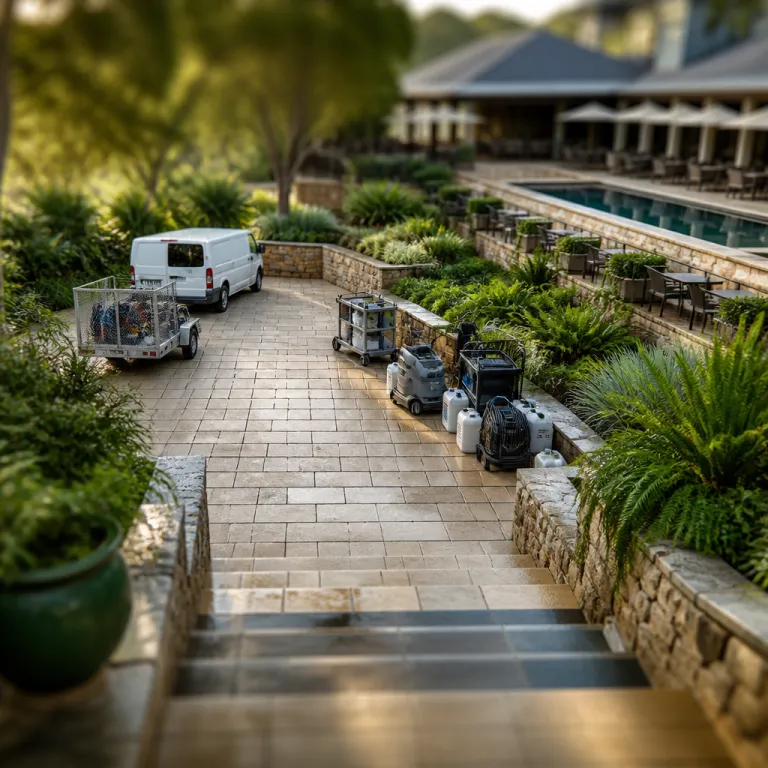
Why stone cleaning partnerships matter for hospitality agencies and suppliers
For travel agencies and tour operators, the state of a hotel’s stone surfaces silently shapes every guest’s perception. When you negotiate packages that include premium lobbies, spa areas, or heritage façades, you are also negotiating the invisible promise that these spaces will stay impeccably clean and visually consistent. In this context, stone cleaning services for commercial cleaning in Australia and New Zealand become a strategic lever rather than a simple operational line item.
Commercial properties across Australia and New Zealand rely on specialized cleaning services to protect marble, granite, limestone, and engineered stone from heavy foot traffic. Professional providers use deep cleaning, sealing, and polishing methods with dedicated cleaning equipment and carefully selected cleaning products, ensuring both aesthetics and health safety for international guests. As a result, agencies and OTAs that can clearly view and explain these property services gain a competitive edge when pitching high value itineraries to corporate clients.
The regional ecosystem is already mature, with industry directories and trade listings indicating on the order of 50 specialist stone cleaning companies in Australia alone operating as part of the wider cleaning industry.1 These companies range from boutique commercial cleaners in a single city to multi city cleaning companies that integrate stone care into broader commercial cleaning contracts. For hospitality suppliers, aligning with the right company or group of companies in Australia and New Zealand is now central to long term asset management and client satisfaction.
Mapping the stone care ecosystem in Sydney, Brisbane and key New Zealand hubs
In the city of Sydney, commercial hospitality assets combine luxury retail, business hotels, and mixed use developments that demand high quality stone finishes. Travel managers selling conference packages in the city of Sydney need confidence that every lobby, corridor, and meeting foyer will remain clean despite intense daily traffic. This is where integrated stone cleaning services and broader commercial cleaning frameworks become critical to the value proposition you present to corporate clients.
Many hotel groups in Sydney NSW now centralize property services and cleaning management at regional level, bundling tailored cleaning for stone floors with façade maintenance and interior commercial cleaners. For agencies coordinating large events, it is increasingly common to request visibility on the hotel’s cleaning requirements, including any medical cleaning protocols in spa or wellness areas that use stone surfaces. When you negotiate master agreements, asking for the name of the cleaning company and a link to its website allows you to assess whether its cleaning solutions align with your brand standards and duty of care.
Brisbane presents a similar pattern, with high growth in commercial cleaning contracts for riverfront hotels and convention venues that showcase extensive stone and tile. In New Zealand, actors such as Slique, Carved Stone, Lustre Ltd, and Stone Lab illustrate how specialized cleaners integrate into cross border portfolios, while Stone Cleaning Services in Western Australia supports trans Tasman chains. Public business registries and company profiles confirm that these firms provide professional stone restoration and maintenance services for commercial properties, including hotels and resorts.1 For professional travel planners managing complex itineraries, aligning airport transfer logistics with property readiness, as outlined in strategic guidance on professional travel transfers, now goes hand in hand with verifying that stone care schedules will not disrupt key check in waves.
From surface appearance to health, safety and ESG for hospitality portfolios
Stone surfaces are often perceived as a purely aesthetic topic, yet for hospitality brands they sit at the intersection of health safety, sustainability, and guest experience. Commercial cleaning contracts that include stone cleaning services in Australia and New Zealand now routinely specify eco friendly cleaning products and low noise cleaning equipment to protect both guests and employees. This shift is particularly relevant for agencies and OTAs that promote responsible travel and need verifiable ESG narratives behind every contracted property.
Many providers in the region have moved towards environmentally responsible cleaning solutions, using specialized agents that respect both stone integrity and indoor air quality. As one regional cleaning industry sustainability review notes, “Increased demand for eco-friendly cleaning solutions” is reshaping how commercial cleaners design their service portfolios for hotels and resorts.2 For travel managers, this means that a clean lobby or spa is no longer enough; you must also ensure that the underlying cleaning services support your clients’ corporate sustainability commitments.
Health safety considerations extend beyond visible cleanliness to include slip resistance, microbial control, and waste handling in high traffic areas. Guidance on hygiene centric design, such as the analysis of hygiene in professional hospitality spaces, aligns closely with the way stone floors and walls are maintained. When you evaluate a hotel’s cleaning industry partners, asking how often stone is cleaned, which sealing cycles are used, and how waste and water are managed will help you align property services with both guest expectations and regulatory frameworks.
Designing partnership models between agencies, OTAs and stone care companies
For leisure and business agencies and tour operators, the relationship with stone care providers is usually indirect, mediated by hotel management or ownership groups. Yet the growing strategic importance of stone cleaning services for commercial cleaning in Australia and New Zealand invites a more proactive partnership approach. By treating stone care as part of the broader supplier ecosystem, agencies can co create standards that benefit all clients and cities in which they operate.
One effective model is to include explicit clauses on stone maintenance within preferred supplier agreements, specifying high quality thresholds, response times, and tailored cleaning for peak seasons. Typical service level clauses might define maximum response times for stain removal, minimum frequencies for deep cleaning in lobbies, and requirements for using eco friendly cleaning products in guest facing areas. OTAs can go further by integrating a property’s cleaning services profile into internal scoring systems, using data on cleaning companies, commercial cleaners, and cleaning requirements as a proxy for long term asset care. This type of management approach allows you to align marketing promises with operational realities, reducing the risk of guest complaints about worn or stained stone in flagship properties.
Another avenue is to encourage hotels to work with recognized specialists such as Slique, Carved Stone, Lustre Ltd, Stone Lab, or Stone Cleaning Services in Western Australia when they operate across Australia and New Zealand. Company descriptions and case galleries show that these providers deliver stone cleaning, sealing, and restoration for commercial clients, including hospitality venues, often with documented before and after results and references.1 As one corporate travel buyer recently summarized after a large conference in Sydney, “Knowing a specialist stone care team was on call meant we could focus on delegates, not on whether the lobby would still look pristine after 2,000 daily arrivals.” For travel managers and corporate clients, this level of reassurance can be as valuable as seeing a strong brand name on the façade.
Operational integration: aligning cleaning schedules, guest flows and staff management
Operationally, the success of any stone cleaning services program in commercial hospitality settings depends on precise coordination between cleaners, hotel employees, and guest flows. Agencies and travel managers rarely see this backstage choreography, yet it directly affects the perceived quality of a stay. When stone floors are cleaned at the wrong time, guests may face slippery surfaces, noise, or blocked access during key arrival windows.
Best practice in Australia and New Zealand involves aligning commercial cleaning schedules with flight banks, check in peaks, and event timetables shared by travel partners. Property services teams use management tools to map out when commercial cleaners can safely perform deep cleaning, polishing, or sealing without disrupting guests or staff. A simple operational checklist might include confirming cleaning windows for lobbies and corridors, verifying signage and barriers during wet cleaning, and reviewing contingency plans for unexpected spills during major events. For agencies, requesting a clear view of these schedules during site inspections helps ensure that services remain clean and accessible when your clients actually use them.
Hotels in Sydney, Brisbane, and major cities in New Zealand increasingly rely on digital platforms where the cleaning company logs tasks, incidents, and photos for quality control. OTAs and corporate buyers can request anonymized access or summary reports from these systems to validate that cleaning services, including stone care, meet agreed standards. This level of transparency supports client satisfaction, strengthens trust between companies, and allows all parties to adjust cleaning solutions when occupancy patterns or health safety regulations change.
Embedding stone care into sustainability, certification and long term asset value
Stone cleaning services for commercial cleaning in Australia and New Zealand now sit firmly within broader sustainability and certification agendas for hospitality portfolios. Agencies and OTAs that promote responsible travel increasingly ask whether hotels align with frameworks such as the Global Sustainable Tourism Council, which now includes detailed expectations for facility management. Analysis of the GSTC’s latest framework for hospitality sustainability, available in this hospitality sustainability standard overview, shows how cleaning practices intersect with resource efficiency and guest wellbeing.
From an asset perspective, regular professional cleaning of stone surfaces at an average cost of around 20 AUD per square metre in commercial settings can significantly extend lifespan and reduce major renovation needs, according to facilities management benchmark studies and pricing guides for Australian service providers.3 For hotel owners and suppliers, this transforms cleaning services from a recurring expense into a form of preventive investment that protects both brand image and resale value. Agencies that understand this dynamic can better explain to clients why certain properties command higher rates yet deliver more consistent quality over time.
In New Zealand, specialists such as Slique, Carved Stone, Lustre Ltd, and Stone Lab increasingly collaborate with local businesses and property managers to design long term maintenance plans. These plans combine high quality cleaning products, eco friendly cleaning equipment, and tailored cleaning frequencies based on traffic patterns and climate. For travel managers and OTAs, partnering with hotels that follow such structured cleaning solutions ensures that stone surfaces remain clean, safe, and visually aligned with the premium experiences promised in brochures and on every website.
Key statistics for stone cleaning in commercial hospitality
- Industry reports and commercial cleaning directories indicate that around 50 specialized stone cleaning companies operate in Australia, highlighting a mature and competitive cleaning industry for commercial properties.1
- The average cost of professional commercial stone cleaning is approximately 20 AUD per square metre, which positions stone care as a relatively small share of total property services costs but with a high impact on perceived quality.3
- Service providers across Australia and New Zealand report that commercial stone surfaces in hotels should be professionally cleaned at least once a year, with higher frequencies in city centre properties that experience intense foot traffic.
- Many providers in the region now use eco friendly cleaning products and optimized cleaning equipment, responding to a documented increase in demand for sustainable cleaning solutions from both hotel owners and corporate clients.2
- Specialist companies such as Slique, Carved Stone, Lustre Ltd, Stone Lab, and Stone Cleaning Services in Western Australia illustrate how regional expertise clusters support cross border hotel portfolios in Australia and New Zealand, as evidenced by their published service descriptions and project references.1
FAQ about stone cleaning partnerships for hospitality agencies and suppliers
Which types of stone surfaces in hotels can be professionally cleaned ?
Commercial stone cleaning companies in Australia and New Zealand typically work on marble, granite, limestone, and engineered stone used in lobbies, bathrooms, spas, and outdoor areas. These cleaners use tailored cleaning products and equipment to respect each material’s porosity and finish. For agencies and OTAs, confirming the scope of surfaces covered helps align guest expectations with actual property capabilities.
How often should commercial stone surfaces in hospitality properties be cleaned ?
For most hotels, professional stone cleaning at least once a year is recommended, with more frequent interventions in high traffic zones such as reception halls or conference corridors. Properties in busy city locations like Sydney or Brisbane may schedule quarterly or biannual services to maintain a consistently clean appearance. Travel managers should ask hotels to share their cleaning schedules when contracting large events or long stay corporate programs.
Are the stone cleaning products used in hotels environmentally friendly ?
Many providers in Australia and New Zealand now prioritize eco friendly cleaning solutions that minimize volatile organic compounds and reduce water consumption. Agencies focused on sustainable travel can request documentation on cleaning products, certifications, and disposal practices as part of supplier due diligence. This information supports ESG reporting for corporate clients and aligns with emerging hospitality sustainability standards.
How can travel agencies and OTAs evaluate a hotel’s stone cleaning quality ?
Beyond visual inspection during site visits, agencies can ask hotels to identify their cleaning company, share sample reports, and outline health safety protocols related to stone surfaces. Requesting references from other corporate clients or tour operators that use the same properties can provide additional assurance. Including clear cleaning requirements and quality indicators in contracts helps ensure consistent performance over time.
What is the role of specialized stone care companies in multi property portfolios ?
Specialized stone care companies such as Slique, Carved Stone, Lustre Ltd, Stone Lab, and Stone Cleaning Services in Western Australia often act as expert partners for hotel groups operating across Australia and New Zealand. They design tailored cleaning and restoration programs that maintain consistent standards across different cities and climates. For agencies and hospitality suppliers, working with properties that use such experts reduces operational risk and supports long term asset value.
References
- Industry Report on Stone and Tile Care in Australia and New Zealand, commercial property maintenance section (company counts, specialist profiles, and market structure).1
- Regional Cleaning Industry Sustainability Review, Australia and New Zealand edition (trends in eco friendly cleaning solutions and equipment, including hospitality case studies).2
- Service Pricing Guide for Commercial Stone Cleaning in Australia, facilities management benchmark study and aggregated provider price lists (average cost per square metre and maintenance recommendations).3