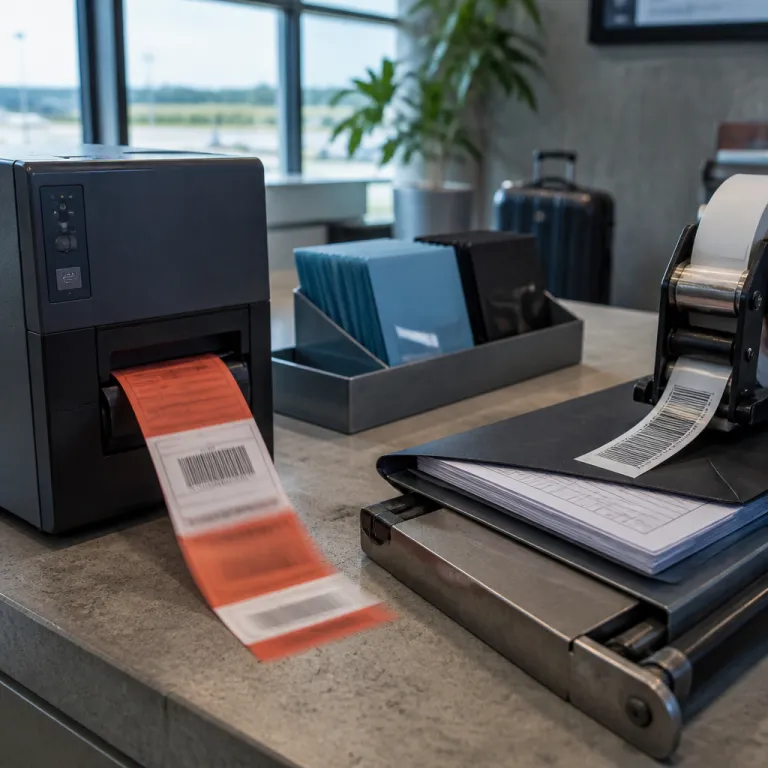
Redefining travel BPO services for a connected hospitality ecosystem
Travel BPO services now sit at the heart of the hospitality ecosystem, quietly reshaping how agencies and suppliers collaborate. For leisure and business travel agencies, tour operators, travel managers, online travel agencies (OTA), and hotel suppliers, these services turn fragmented travel operations into a single orchestrated business process. When a traveler moves from inspiration to booking and then to check out, every call, message, and service interaction can be handled through specialized outsourcing services that protect both margins and customer satisfaction.
At its core, travel BPO means delegating defined travel operations and customer support to expert teams that live and breathe travel hospitality. The formal definition is simple: “What is travel BPO? Outsourcing travel industry operations to third-party providers.” Yet for travel businesses and hotel partners, the real value lies in how these BPO services integrate with Global Distribution Systems, CRM platforms, and real-time data flows to create a seamless customer experience.
Specialized providers in established and emerging hubs offer 24/7 customer service, multilingual support, and reservation management tailored to travel companies. Their call center and back-office services handle booking changes, schedule disruptions, and loyalty program queries while your internal teams focus on product design and strategic management. For OTAs and tour operators, this outsourcing model transforms fixed service costs into flexible solutions that scale with peak season demand and off-season recalibration.
From call center to strategic partner in travel hospitality
Many agencies still associate a call center with basic call handling, yet modern travel BPO services operate as strategic partners in travel hospitality. These BPO services manage complex customer journeys, from pre-trip inspiration to post-stay feedback, while protecting brand voice and service quality. For hotel suppliers, that means every travel call about room types, amenities, or even a seemingly minor topic such as an ice dispenser as a strategic asset can be handled with the same attention as a high-value group booking.
Travel BPO providers now combine traditional customer service with advanced data management and AI-assisted support to deliver consistent customer experience. Publicly available briefings from firms such as McKinsey & Company and Accenture have documented rapid AI adoption in travel and hospitality contact centers since 2020, with many large travel companies piloting or scaling AI-powered chat, email triage, and knowledge tools. Rather than treating any single provider’s portfolio figures as universal industry statistics, these sources should be read as directional evidence of how quickly AI is being embedded into travel customer service. This shift means that each customer interaction, whether via call, chat, or email, generates data that can be analyzed in near real time to refine products, pricing, and loyalty program design.
For travel managers and corporate travel business leaders, outsourcing services can cover policy-compliant booking, traveler tracking, and disruption management while maintaining strict duty of care. Agencies and OTAs can route peak season overflow to external teams, ensuring no call is missed and every traveler receives timely support. When BPO services are embedded into the wider business process, they become a lever for higher customer satisfaction, better retention, and measurable ROI on every euro invested in service quality.
Designing customer experience across agencies, OTA, and hotel suppliers
Customer experience in travel is no longer defined only at the hotel front desk or airline gate. It is shaped by every service touchpoint, from the first travel call to the last loyalty program email, and travel BPO services now curate this continuum for agencies and hotel suppliers. For OTAs and tour operators, outsourcing customer support to specialized BPO teams ensures that booking flows, payment issues, and itinerary changes are handled with empathy and precision.
Travel hospitality brands increasingly use AI chatbots and multilingual agents to provide first-line support, while human teams step in for complex cases or high-value travelers. This hybrid model aligns with the industry focus on “AI integration in customer support, multilingual support services, focus on personalized experiences” highlighted by leading providers in their public case studies and annual reports. When combined with sensory details on property, such as refined air care strategies supported by products like those described in the air care strategies for hospitality professionals, the result is a coherent experience from digital to physical space.
For hotel suppliers, outsourcing services can include handling pre-arrival questions, upselling room categories, and managing post-stay feedback in a dedicated call center. Travel BPO teams can segment travelers by purpose, spend, and behavior, then adapt service scripts to leisure, business, or bleisure profiles in real time. Agencies that align their internal CRM with BPO data flows can recommend tailored offers, improve customer satisfaction scores, and strengthen long-term loyalty across multiple brands and destinations.
Data driven management and real time performance in travel BPO
Behind every smooth customer interaction sits a dense layer of data management that most travelers never see. Travel BPO services collect, structure, and analyze operational data from calls, chats, emails, and bookings to optimize both service quality and business performance. For travel businesses and hotel suppliers, this means that each interaction becomes a measurable asset rather than an isolated service event.
Modern BPO services use dashboards that show real-time indicators such as average handling time, first call resolution, Net Promoter Score, and conversion rates from service to booking. Industry white papers from global outsourcing associations and consulting firms consistently report that mature travel and hospitality contact centers track these metrics daily and adjust staffing, scripts, and escalation rules during peak season rather than after it. In line with broader AI adoption trends documented in these sources, the competitive edge increasingly comes from how intelligently this data is used rather than from technology alone.
For corporate travel operations, data from customer support interactions can reveal policy friction points, preferred suppliers, and recurring pain points in specific destinations, including emerging hubs in India and other fast-growing markets. Agencies that link BPO center services with revenue management and product development can refine their business process to prioritize high-margin itineraries and high-value travelers. This data-driven approach turns outsourcing services into a strategic engine that supports both operational resilience and long-term loyalty program performance.
Building resilient partnerships across the travel and hospitality value chain
Resilience in travel hospitality now depends on the strength of partnerships between agencies, OTAs, tour operators, travel managers, and hotel suppliers. Travel BPO services act as connective tissue in this ecosystem, ensuring that customer service standards remain consistent even when volumes spike or disruptions hit. When a storm cancels flights or a health event reshapes demand, BPO teams can absorb the surge in calls and messages while internal teams focus on renegotiating conditions with airlines and hotels.
Effective outsourcing services start with rigorous partner selection: agencies must verify BPO provider experience, ensure data security measures, and assess scalability of services. Publicly available RFP templates and procurement guidelines from travel management associations emphasize the importance of checking certifications, data protection controls, and multilingual capabilities. Once the right partner is chosen, joint governance structures, shared KPIs, and regular quality reviews keep both sides aligned on customer satisfaction and financial results.
One mid-sized European leisure agency, for example, partnered with a travel BPO center in India to handle after-hours calls and peak season overflow for its hotel and tour bookings. According to an internal case study shared with its preferred suppliers in 2023, the agency documented a reduction in abandoned calls during summer by nearly one third and reported higher customer satisfaction scores on post-trip surveys, while internal staff were able to focus on product curation and key account management. For hotel suppliers, integrating with agency and OTA BPO services can similarly streamline group booking management, rate parity checks, and overbooking resolution in real time. Travel businesses that treat their BPO partner as an extension of their own teams, rather than a low-cost call center, tend to report stronger customer experience scores and more durable loyalty. In this context, many travel managers recommend co-creating training programs, shared knowledge bases, and crisis playbooks that allow all parties to respond coherently when the unexpected happens.
Monetizing expertise and elevating service models with travel BPO
As commissions compress and distribution costs rise, agencies and tour operators must rethink how they monetize expertise and service. Travel BPO services can support this shift by handling routine customer support while internal teams focus on advisory work, complex itineraries, and fee-based consulting. Resources such as the planning fee playbook presented in strategies to move beyond commission only show how agencies can redesign their revenue model while keeping service quality high.
Outsourcing services allow travel businesses to separate high-value advisory interactions from operational tasks such as ticketing, schedule changes, and documentation checks. BPO services can manage these repetitive yet critical steps with standardized processes, robust quality control, and specialized center services that operate across time zones. This division of labor frees internal teams to focus on relationship building, loyalty program design, and strategic management of key travel companies and hotel partners.
For OTAs and hotel suppliers, travel BPO and broader BPO services can also support ancillary revenue initiatives, from upselling transfers and insurance to promoting on-property experiences. When customer data from every call and chat is fed back into CRM systems in real time, marketing teams can design targeted campaigns that reflect actual traveler behavior rather than assumptions. Agencies that embrace this model often recommend it internally, as it aligns customer experience, operational efficiency, and financial performance in a single coherent business process.
Operational excellence, training, and quality in outsourced travel call centers
Operational excellence in travel BPO services does not happen by accident; it is engineered through rigorous training, process design, and continuous improvement. Travel call centers that serve agencies, OTAs, and hotel suppliers must master complex fare rules, hotel policies, and loyalty program conditions while maintaining a warm, human tone. This requires structured onboarding, regular coaching, and close collaboration between BPO trainers and in-house product experts.
Leading BPO services invest heavily in multilingual recruitment, scenario-based training, and quality monitoring that goes beyond simple call duration metrics. They evaluate empathy, problem solving, and brand alignment, using recorded interactions and customer feedback to refine scripts and support flows. For travel managers and suppliers, this focus on quality ensures that outsourcing services enhance rather than dilute the brand, even during peak season when volumes and stress levels rise sharply.
When travel businesses treat their BPO partner as part of the same extended team, knowledge flows more freely and customer experience improves measurably. Joint workshops, shared dashboards, and regular calibration sessions help align expectations on service quality, escalation paths, and real-time communication during disruptions. Over time, this integrated approach turns the call center from a cost line into a strategic asset that supports sustainable growth, higher customer satisfaction, and durable loyalty across the entire travel hospitality ecosystem.
Key figures shaping travel BPO and hospitality partnerships
- According to a 2022 McKinsey & Company perspective on travel and hospitality operations, many large travel brands now use AI-enabled tools in customer support, and several report that a majority of their contact volumes are at least partially assisted by automation. These findings illustrate how deeply AI has penetrated customer support and travel operations for the companies studied, rather than the entire global market.
- Industry benchmarks from global outsourcing associations and consulting firms commonly indicate that outsourcing customer service can reduce operational cost by roughly 20 to 40% while maintaining or improving customer satisfaction scores, especially when multilingual teams handle global travelers. These ranges are indicative and vary by business model, geography, and scope of services, and readers should consult the latest benchmark reports for precise figures.
- Case studies published by major travel management companies and BPO partners show that integrating BPO center services with CRM and loyalty program platforms can increase repeat booking rates by around 10 to 15%, as personalized offers are triggered in real time after service interactions. These figures are typically drawn from internal, time-bound projects and should be interpreted as examples rather than universal guarantees.
- Travel agencies and OTAs that route peak season overflow to specialized call centers often report up to 30% fewer abandoned calls, directly improving both immediate revenue capture and long-term customer experience. Exact results depend on call routing rules, staffing, and training quality, and are usually documented in internal performance reviews or provider case studies.
- Surveys among corporate travel managers conducted by various TMCs and BPO partners over the past few years indicate that partnering with travel BPO providers for policy-compliant booking and traveler support can cut internal administrative workload by up to one third, freeing teams for strategic supplier management and program optimization. These surveys are typically published as anonymized summaries, so readers should review the methodology notes when available.
FAQ about travel BPO services for agencies and hospitality partners
What is travel BPO and how does it apply to agencies and OTA ?
Travel BPO refers to outsourcing defined travel operations and customer support activities to specialized third-party providers that understand travel hospitality. For agencies, tour operators, and OTAs, this can include reservation handling, ticketing, schedule changes, and multi-channel customer service. The goal is to improve efficiency, reduce costs, and maintain consistent service quality across time zones and peak season fluctuations.
Why should a travel business or hotel supplier use travel BPO services ?
Agencies and hotel suppliers use travel BPO services to improve customer service efficiency, reduce operational cost, and enhance customer satisfaction without expanding internal headcount. Outsourcing services allow them to access multilingual teams, 24/7 coverage, and specialized tools such as GDS and CRM platforms. This model is particularly valuable when managing global travelers, complex itineraries, and sudden spikes in demand.
What types of services do travel BPO providers usually offer ?
Most travel BPO providers offer a mix of customer support, reservations, back-office processing, and technical assistance tailored to travel companies. This can include call center operations, email and chat support, fare and rule checks, documentation verification, and loyalty program administration. Some providers also add AI-driven solutions that enhance real-time decision making and personalization, as described in their public product documentation and case studies.
How can agencies ensure quality and data security when outsourcing ?
Agencies should start by verifying the BPO provider’s experience in travel hospitality, including references from similar travel businesses. They must also ensure robust data security measures, from encryption to compliance with privacy regulations, and assess scalability of services to handle growth and peak season. Clear service level agreements, regular quality audits, and shared dashboards help maintain transparency and protect both brand and traveler data.
What role does AI play in modern travel BPO services ?
AI now supports many aspects of travel BPO, from chatbots that handle routine queries to decision engines that prioritize cases and suggest next best actions to agents. With a growing share of travel companies already using AI support according to consulting reports and provider case studies, the focus has shifted to integrating AI outputs into human workflows. When used well, AI improves response times, consistency, and personalization while human teams handle complex, emotional, or high-value interactions.